


Eviction Mediation in Texas: When It Works and When It Doesn't
Eviction mediation can save landlords and tenants a lot of time, money and stress. So why doesn't it happen more often?
As a mediator, I'd rather be honest with you than sell you on something that won't fit your situation. Mediation is a powerful tool, but in eviction cases it isn't always an option. Here's why, and how to tell whether your situation is one where it can actually help.
Why eviction mediation doesn't happen often
Mediation is voluntary. Everyone involved has to agree to take part. If one side doesn't want to mediate, mediation can't happen. No one can be forced to the table.
In eviction cases, that's often where things stop. A few common reasons:
The tenant plans to stay as long as the process allows. Someone who has been through evictions before may know the timeline well. If they're not worried about another eviction on their record, they may see little reason to negotiate and may simply remain until the court process runs its course and an officer carries out the final order.
The landlord has already decided they want the unit back, no matter what's offered, and would rather let the court process play out.
Communication has completely broken down, and one side isn't willing to have any conversation at all.
In any of these situations, mediation won't be the answer, and that's okay. It's better to know early than to wait on a process that was never going to start.
Why an eviction costs more than it looks
On paper, a Texas eviction moves quickly. In practice, every step adds time and money, and each one is a chance for delays.
Notice to vacate. Usually 3 days unless the lease says otherwise. Some properties covered by federal rules require a longer notice period before the tenant can be removed.
Filing in justice court. For cases filed in 2026, the court sets the trial 10 to 21 days after filing.
Judgment and appeal window. Either side has 5 days to appeal. An appeal moves the case to county court for a brand-new trial, while the tenant pays rent into the court's registry.
Writ of possession. If there's no appeal, the landlord can request a writ starting 6 days after the judgment, for an additional fee. Only a constable, sheriff or other authorized officer can carry it out.
Add up the filing fee, service fee, writ fee, missed rent, a day (or more) in court, and the time the unit sits empty afterward, and the real cost of an eviction is often far more than the court fees alone. An appeal can stretch the process by weeks.
For tenants, the cost is different but just as real: an eviction judgment can follow them for years and make it much harder to rent their next home.
When eviction mediation works
Mediation works best when both sides would rather solve the problem than fight about it. A common example: a tenant with a good rental history who fell behind because of something outside their control, such as a job loss, an illness or a family emergency.
That tenant usually doesn't want an eviction on their record and wants to make it right. And many landlords would rather recover what they're owed, or get the unit back on a clear schedule, than spend weeks in court.
In mediation, both sides might work out:
A payment arrangement for the back rent, with amounts and dates that are realistic for the tenant and acceptable to the landlord.
A move-out timeline that gives the tenant time to find a new place and gives the landlord a firm date to get the unit back.
Both: a move-out date plus a plan for what's owed.
At the end, both sides sign a memorandum of understanding (MOU) that outlines what they agreed to. If they choose, either side can take it to an attorney to have a formal agreement drafted.
What each side can gain
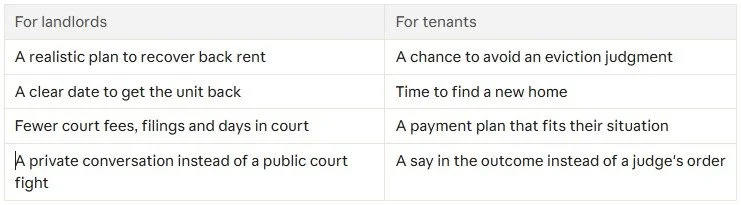
Mediation is often done in a few hours, online, and it doesn't take away anyone's rights. If mediation doesn't lead to an agreement, the landlord can still pursue the eviction through the court, and the tenant can still present their side there.
The honest bottom line
Eviction mediation can save a lot of time and money, but it's not always an option. It only works when both sides are willing to talk. When they are, one conversation can often accomplish what weeks in court can't.
If you're a landlord or a tenant facing a possible eviction and you think the other side might be open to talking, a free consultation is a good place to start. We'll talk through whether mediation fits your situation, with no pressure.
I'm Nikkita Torres with Neutral Voice Mediation. I mediate landlord–tenant disputes online across Texas, and I stay neutral: I don't represent either side.
This post is general information, not legal advice. Eviction rules and timelines can change and may depend on your lease, your property and your county. If you're facing an eviction, consider speaking with an attorney or your local legal aid office, and don't miss any court deadlines while you explore mediation.