

Landlord Tenant Mediation
A faster, more affordable, and less stressful way to resolve landlord tenant disputes — without small claims court.
Landlord tenant disputes are among the most frustrating conflicts a person can face. Whether you are a landlord trying to recover unpaid rent or reclaim a damaged property or a tenant fighting for your security deposit or repairs that were promised and never made — the situation feels stuck and the options feel limited.
Small claims court is time consuming, unpredictable, and requires you to take time away from work and life to sit in a courtroom waiting for a judge who does not know your situation to make a decision that may or may not be fair to either party.
There is a better option.
I am Nikkita, a certified mediator at Neutral Voice Mediation. I work with landlords and tenants virtually across Texas and the United States to resolve disputes quickly, privately, and at a fraction of the cost of litigation — with both parties walking away with an agreement they helped create.
Common Landlord Tenant Disputes I Help Resolve
-
One of the most common landlord tenant conflicts. Whether the disagreement is about deductions, damages, or the timeline for returning the deposit mediation provides a fair and structured process for reaching a resolution both parties can agree on.
-
When a tenant has fallen behind on rent and communication has broken down mediation creates a neutral space to discuss payment arrangements, timelines, and conditions that work for both parties without immediately escalating to eviction proceedings.
-
Disagreements about what constitutes normal wear and tear versus actual damage are extremely common. Mediation allows both parties to present their perspective and reach a fair assessment without a judge deciding for them.
-
When a tenant is accused of violating lease terms or a landlord is accused of not upholding their obligations under the lease mediation provides a structured process for addressing the issue and determining a path forward.
-
When a tenant believes the landlord has failed to maintain the property in a habitable condition mediation gives both parties the opportunity to address the issue directly and agree on a timeline and plan for resolution.
-
Disagreements about the condition of the property at move out, final utility payments, and the return of personal property are all situations where mediation can produce a faster and fairer resolution than small claims court.
-
When a tenant needs to leave before the lease ends or a landlord needs to end the tenancy early mediation helps both parties negotiate the terms of early termination — including any financial obligations — in a fair and structured way.
Why Landlords Choose Mediation
As a landlord your time and your property are your most valuable assets. Here is what mediation offers you:
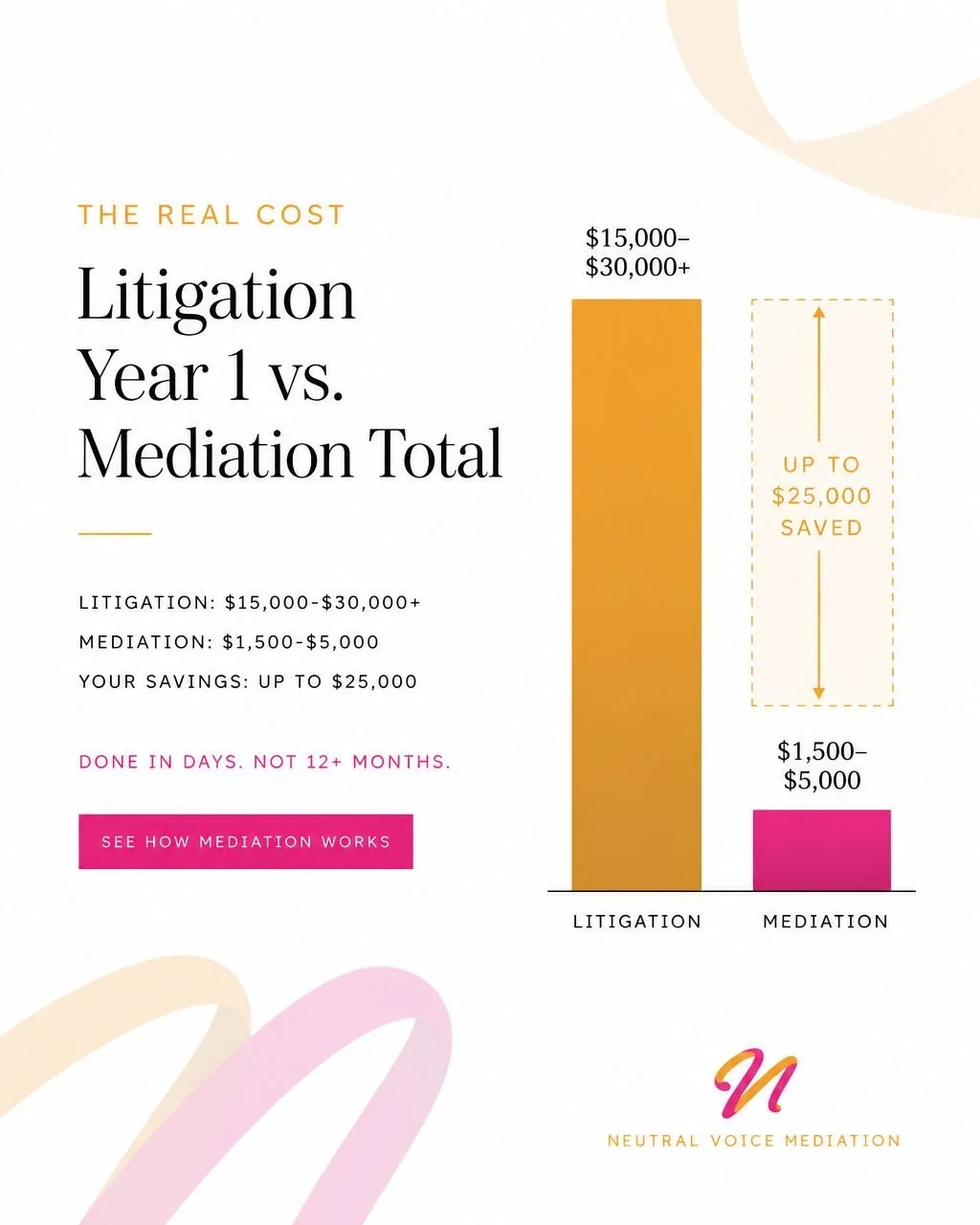
Going to small claims court means filing fees, waiting months for a hearing date, taking time away from your business, and accepting whatever the judge decides — which may not cover your actual losses. And even if you win a judgment collecting it is another matter entirely.
Mediation is faster — disputes are typically resolved in one or two sessions. It is more affordable — no filing fees, no attorney costs. And agreements reached in mediation are far more likely to be honored by the other party because they helped create them.
Mediation also preserves the possibility of a workable resolution even in situations where the tenant is still in the property — which means less disruption to your rental income and less damage to the property relationship.
Why Tenants Choose Mediation
As a tenant your home and your finances are what is at stake. Here is what mediation offers you:
You have rights — and mediation gives you a structured, neutral space to assert them without the cost and stress of navigating the court system alone. No attorney required. No filing fees. No formal legal process to figure out.
In mediation you have an equal voice. I am not on the landlord's side. I am not on your side. I am on the side of a fair and workable resolution — and that means your concerns, your perspective, and your needs are heard equally alongside the landlord's.
And because mediation is confidential nothing you say can be used against you in a legal proceeding. You can speak honestly about the situation without fear.
What Landlord Tenant Mediation Looks Like
All sessions are held virtually over Zoom.
Free Consultation
We start with a no-pressure call where you share what is happening and I answer your questions about the process.
Each party meets with me privately before the joint session. This gives each party a confidential space to share their full perspective without the other party present.
Individual Pre-mediation Sessions
Both parties come together with me facilitating. We work through the dispute systematically — hearing each party's perspective, identifying the core issues, and working toward an agreement that is fair to both sides.

Joint Mediation Session
The Agreement
The terms you reach are documented in a mediation agreement that both parties review and sign. This agreement is enforceable and can be submitted to the court if needed.

Frequently Asked Questions
6
Yes. Security deposit disputes are one of the most common issues mediation resolves. A neutral mediator helps the landlord and tenant work out what's owed and why, without going to small claims court.
Can mediation help with a security deposit dispute?
1
Mediation offers a faster alternative to the eviction process. A mediator brings both sides together to work out a repayment plan, move-out timeline, or other resolution without the months-long wait of eviction court.
What can a landlord do if a tenant stops paying rent?
2
Yes. When a landlord and tenant disagree about whether repairs are needed, who's responsible, or how quickly they should happen, mediation gives both sides a structured way to reach a workable agreement.
Can mediation resolve disagreements about repairs or habitability?
3
Can mediation help avoid an eviction filing?
4
What happens during a landlord-tenant mediation session?
Often, yes. Mediation gives landlords and tenants a chance to resolve the underlying issue such as unpaid rent, lease violations, or move-out terms before an eviction filing becomes necessary, saving both time and money.
After a free consultation, each party has an individual pre-mediation session, followed by a joint mediation session where both sides work toward an agreement with a neutral mediator facilitating. Sessions are held over Zoom.
Is a mediated landlord-tenant agreement enforceable?
5
Yes. The agreement reached in mediation is legally enforceable and can be submitted to court if needed, just like a judgment.