


Co-Parenting Mediation & Parenting Plans
Creating a parenting plan that actually works — for your family, for your child, and for your life.
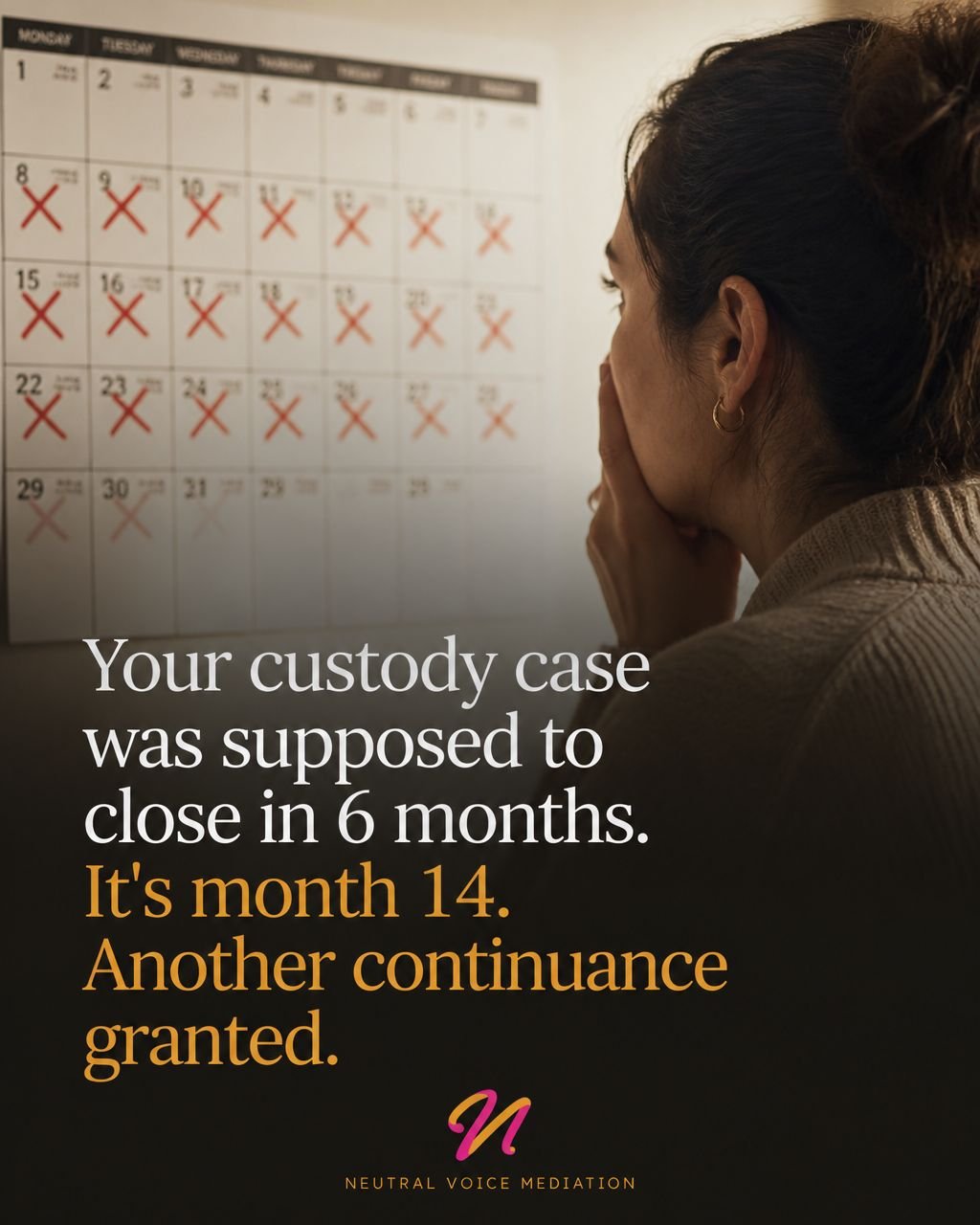
If you are navigating a separation or divorce and you have children, one of the most important things you will do is create a parenting plan. Not just any plan — a detailed, thoughtful, court-ready agreement that puts your child's needs first and gives both parents clarity, structure, and confidence going forward.
That is exactly what co-parenting mediation at Neutral Voice Mediation is designed to help you create.
I am Nikkita, a certified mediator serving co-parents virtually across Texas and the United States. Whether you are in Dallas, Waco, or anywhere in between, I can help you and your co-parent build a parenting plan together — on your terms, without a courtroom.

What Does Co-Parenting Mediation Look Like?
All sessions at Neutral Voice Mediation are held virtually over Zoom so you can participate from anywhere in Texas or the US. Here is how the process works:
-
We start with a free no-pressure call to talk through your situation and answer any questions you have about the process.
-
Each parent meets with me privately before the joint session. This gives each of you a safe space to share your perspective, your concerns, and what you most want the parenting plan to reflect.
-
Both parents come together to work through the details of the parenting plan with me facilitating. We cover every aspect of your plan — schedules, holidays, communication, decision making, and so much more.
-
The terms you agree on for your parenting plan are documented in real time during the session and can be submitted to the court for approval. It is yours — built by both of you, for your child.
-
Life with kids does not always go exactly as planned. At Neutral Voice Mediation co-parenting clients have 90 days after their session to try the plan in real life. If adjustments are needed, you are welcome to come back within that window at no additional charge.
What is a Parenting
Plan?
A parenting plan is a legally binding agreement between co-parents that outlines how you will raise your child after separation or divorce. A well written parenting plan covers:
Physical and legal custody arrangements
A detailed visitation and parenting time schedule
Holiday, birthday, and school break schedules
Decision making responsibilities for education, healthcare, and religion
Communication expectations between co-parents
Guidelines for introducing new partners
How future disputes or changes to the plan will be handled
Child support and expense sharing arrangements
The more detailed your parenting plan the less room there is for misunderstanding, conflict, and future court involvement. A vague plan creates problems. A specific plan creates peace.
Why Use a Mediator to Create Your Parenting Plan?
Many co-parents try to create a parenting plan on their own — sometimes using AI tools, online templates, or attorney drafted documents. While any preparation is better than none, here is what those options often miss:
A parenting plan created without a neutral facilitator often reflects what one parent wants rather than what works for both. It may look complete on paper but leave critical details unaddressed that create conflict later.
Mediation is different. In co-parenting mediation both parents have an equal voice. I guide the conversation, ensure both perspectives are heard, and help you build a plan that is specific to your child, your schedules, your family dynamics, and your life — not a generic template.
The result is a parenting plan both of you helped create — which means both of you are far more likely to honor it.
What Should a Good Parenting Plan Include ?
Custody and parenting time
Who has the child and when. A detailed weekly schedule that accounts for school days, weekends, and transitions.
Holiday and special occasions schedule
How holidays, school breaks, birthdays, and Mother's Day and Father's Day are divided. The more specific the better.
Decision making
Who makes decisions about education, medical care, extracurricular activities, and religion — and how disagreements about those decisions are handled.
Communication between co-parents
How and when co-parents communicate with each other. Response time expectations, preferred communication methods, and what tools will be used.
Child's communication with each parent
The child's right to communicate freely with both parents during the other parent's parenting time.
Dispute resolution
What happens if co-parents disagree about something after the plan is in place — including a return to mediation before litigation.
Transportation and exchanges
Who is responsible for pickup and dropoff, where exchanges happen, and what happens if a parent is late.
A Tool I Recommend for Co-Parents
One thing I always encourage co-parents to do before mediation is come prepared. The more organized you are going into our session the more productive and efficient it will be.
One tool I have recently discovered and genuinely recommend is KidTime — a co-parenting app that helps parents build a court-ready parenting plan in plain language, track expenses, keep communication on record, and stay organized in one place.
Using a tool like KidTime before your mediation session means we can skip the basics and get straight to building a plan that is specific and detailed for your family. You can learn more at kidtime.app.
Why 50/50 Custody is Often the Healthiest Option
Research consistently shows that children benefit from having consistent meaningful time with both parents. When it is safe and feasible a 50/50 parenting arrangement — where both parents share equal time with the child — is often the healthiest option for the child's emotional development, stability, and overall wellbeing.
50/50 custody works best when:
Both parents live in reasonably close proximity
Both parents are able to communicate and cooperate
The child's school and activities can be managed from both homes
There is no history of domestic violence or substance abuse
If you are concerned about whether 50/50 is right for your situation that is exactly the kind of conversation we can have in your free consultation.
What Happens If One Parent Does Not Follow the Plan?
This is one of the most common questions I hear from co-parents — especially those who are worried the other parent will not honor what they agree to in mediation.
Here is what I tell every client. A parenting plan created in mediation is a legally binding agreement. If the other parent violates its terms you have legal recourse just as you would with any court order.
But here is the advantage of mediation over court. Because both of you had a hand in creating this plan you are both significantly more likely to honor it than something a judge imposed on you without your input. Research consistently shows that mediation agreements have higher compliance rates than court orders — because ownership creates accountability.
And if adjustments are needed down the road — because life changes and kids grow — mediation gives you a way to update the plan together without going back to court.
Frequently Asked Questions
-
Yes — private mediation is voluntary and both parents need to be willing to participate. If you are having trouble getting the other parent on board I have resources specifically for that situation. Visit my page on navigating a reluctant co-parent for guidance.
-
Yes. Once both parents sign the mediation agreement and it is submitted to and approved by the court it becomes a legally enforceable order.
-
That is completely normal. Some parenting plans take multiple sessions to finalize and that is okay. What matters is that both parents are genuinely committed to working toward a resolution that serves their child.
-
Yes. Life changes — jobs, schools, relocations, and the child's own needs evolve over time. The parenting plan can be modified through a return to mediation or through the court process.
-
The safety of you and your child is the priority above all else. Unfortunately, I do not mediate cases with history of domestic violence. There are options and resources available to you through your local court.
-
Sessions are billed at $250 per hour. Most co-parenting mediations take between six and ten hours depending on the complexity of the situation. This is a fraction of the cost of litigation and the parenting plan you walk away with is one you both helped create.
Ready to Get Started?
Your child deserves a plan that puts them first. And you deserve a process that gives you a real voice in that plan.
Book your free consultation today and let's talk about what co-parenting mediation looks like for your family.